Changelly is a card-friendly crypto swap route that checks 20+ rate sources before you send funds
Changelly is a practical route for buying crypto with a bank card or swapping one coin for another when you want the proceeds delivered to your own wallet. Its useful angle is the quote: before an order starts, it pulls rates from more than 20 trading platforms, shows the receiving asset, and hands the transaction through a short checkout flow rather than asking you to manage an order book.
Card buys start with the quote screen
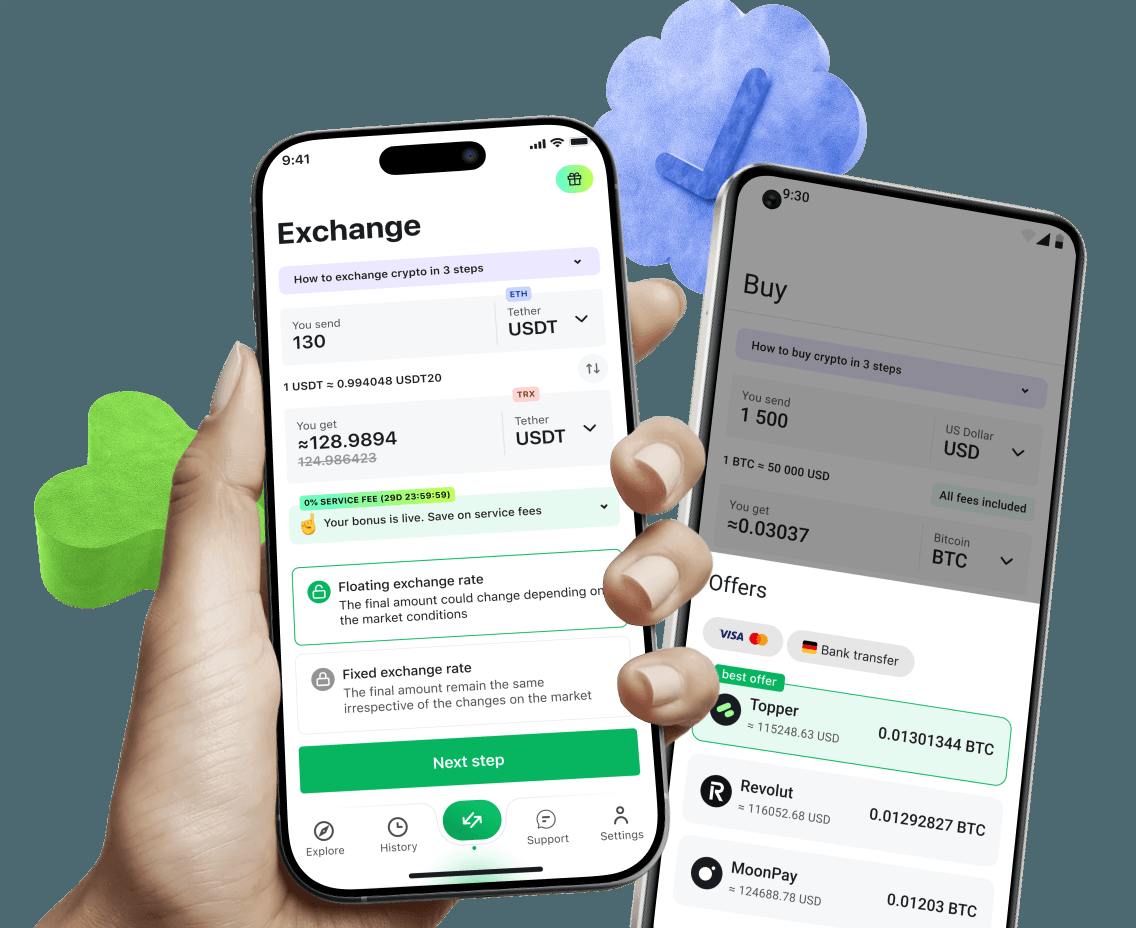
A card purchase begins by choosing the fiat amount, the asset to receive, and the destination wallet. The screen matters because it turns a messy card-to-crypto purchase into a single route: payment currency, coin, network, estimated payout, and wallet address all sit in one flow. That structure is helpful for people who already hold a self-custody wallet but do not want to deposit cash onto a full trading venue first.
The service supports well-known assets such as Bitcoin, Ethereum, XRP, Cardano, Solana, and many altcoins, though availability changes by region, payment partner, and network status. Changelly also presents sell and exchange paths, so the same interface covers a card buy, a crypto-to-crypto swap, or an off-ramp style sale when the relevant payment method is available.
Where the 20-plus rate sources matter
The rate search is the distinctive part. Rather than posting a single internal market, it checks partner trading platforms and selects a quote for the pair you entered. That does not turn every order into the cheapest possible transaction in the entire market, but it gives the user a live comparison layer before funds move.
Small details change the final number: the selected network, liquidity for the exact pair, volatility during checkout, and whether the order uses a fixed or floating quote. Changelly shows the expected receiving amount before the order begins, so the quote screen is the place to slow down and compare the payout against the amount you are about to pay.
Fixed-rate swaps and floating-rate swaps ask different things from the user
A fixed-rate order locks the displayed exchange rate for the short window assigned to that transaction. That route suits buyers who care more about knowing the exact expected payout than chasing a slightly better market move. It is especially useful when sending coins between wallets where the receiving amount needs to match a planned transfer.
A floating-rate order follows market movement until the swap is executed. The received amount rises or falls with liquidity and price action during processing. Changelly places both models into a guided flow, but they are different commitments: fixed rate prioritizes certainty, while floating rate accepts movement in exchange for staying closer to the live market at execution time.
The wallet address is the handoff point
The receiving address is the most important field in the order. The platform does not ask you to keep a long-term exchange balance for a standard swap; the purchased or exchanged asset is sent onward to the wallet address you provide. That makes the address, memo, tag, and network choice part of the payment instruction, not a detail to clean up later.
Assets such as XRP and some exchange-chain tokens use destination tags, memos, or network variants that must match the receiving wallet. A Bitcoin address, an Ethereum address, and a Solana address are not interchangeable. This is where Changelly feels convenient and unforgiving at the same time: the form is simple, but blockchain settlement follows the exact instruction entered.
What the card processor adds to the order
Card buying introduces checks that a plain wallet-to-wallet crypto swap does not always require. A payment partner handles the card transaction, and that partner sets eligibility, accepted currencies, verification steps, and purchase limits. The crypto quote and the card payment sit in the same journey, but the payment rail has its own rules.
Fees also split into layers. The visible payout reflects the exchange route, while card processing costs, spread, and network fees affect what arrives in the destination wallet. The cleanest way to read the screen is to focus on the crypto amount you receive after all included costs, not only the card amount typed into the first field.
The coins and networks that change the experience
Asset coverage is one reason people use Changelly for direct swaps. It lists Bitcoin and Ethereum alongside many smaller altcoins, and it separates popular coins, top gainers, and top losers on its market views. That breadth helps when the goal is to move from a mainstream asset into a harder-to-find token without opening several accounts.
Network choice still shapes speed and cost. Bitcoin settlement follows Bitcoin block timing, Ethereum transfers face gas conditions, and Solana or BNB Chain variants use their own fee markets and address formats. The service publishes an average exchange window of minutes rather than hours, yet the sending chain, partner exchange, and receiving chain decide the real handoff time for a specific order.
How to make the first purchase cleaner
The first purchase goes better when the order is treated as a precise payment instruction. Use a wallet you control, copy the address from the receiving app, and match the network shown in the checkout. Start with an amount that lets you learn the flow before sending a larger transfer, especially when the asset requires a memo or tag.
- Choose the exact coin and network before copying the receiving address.
- Compare fixed and floating quotes when both are offered.
- Read the final receiving amount, not only the input amount.
- Keep the order page open until the deposit or card step is complete.
- Save the transaction ID and wallet transaction hash for support questions.
Those habits matter because blockchain payments do not behave like reversible shopping-cart payments. Changelly provides 24/7 support, but a mistyped address or wrong network sends the issue into chain-specific recovery territory, where outcomes depend on the receiving wallet, asset, and transaction path.
When a DEX or full trading exchange fits better
A decentralized exchange fits users who already hold assets on the right chain and want direct smart-contract execution through a wallet. Uniswap and PancakeSwap are examples of that route: the trade happens on-chain, gas is paid from the wallet, and token approvals are part of the flow. That setup gives more control over slippage and DeFi routing, but it requires more chain knowledge.
A full centralized exchange fits active traders who need limit orders, depth charts, recurring buys, tax exports, and account balances in one place. Coinbase, Kraken, and Binance are better-known examples of that account-based model. Changelly serves a narrower job: quick card purchases and wallet-to-wallet swaps where the quote and destination address are the core controls.
A better way to read the final confirmation
The last confirmation screen deserves the same attention as a wire instruction. Check the sending asset, receiving asset, network, wallet address, expected payout, and order type in one pass. If the card payment is involved, the payment currency and verification request belong in that review too.
Once the order starts, the status page becomes the source of truth for that transaction. It tracks the deposit, exchange, and payout stages so the user knows whether the delay is at payment approval, blockchain confirmation, partner execution, or delivery to the receiving wallet. Used this way, Changelly is strongest as a focused transaction tool: it helps a buyer compare available rates, pay by card when supported, and receive crypto in a wallet without building a trading workstation around the purchase.
Changelly: questions and answers
Can I buy Bitcoin with a debit card and receive it in my own wallet?
Yes, the card-buy flow is designed around receiving crypto at a wallet address you provide during checkout. You choose Bitcoin or another supported asset, enter the purchase amount, add the receiving address, and complete the payment steps set by the card processor. The final payout depends on the quoted rate, payment costs, network fee, and verification requirements for that transaction.
Fees on Changelly card orders: where do they show up?
Costs appear through the final crypto amount quoted for the order. Card processing, exchange spread, partner routing, and network fees all influence how much arrives in the receiving wallet. The most useful comparison is the output amount after costs for the same payment amount and asset, especially when comparing a fixed-rate offer with a floating-rate offer.
Which wallets work best for receiving an instant swap payout?
Use a wallet that clearly shows the asset, network, address, and any required memo or tag. Hardware wallets, mobile self-custody wallets, and exchange deposit addresses all work only when the selected network matches the receiving instructions. For XRP-style assets, the memo or tag is part of the deposit instruction and should be copied with the address.
How long does a card-to-crypto purchase take after payment approval?
The official site describes average exchange timing in the 5 to 40 minute range, but a card purchase has more than one stage. Payment approval, identity checks, blockchain confirmation, exchange execution, and wallet delivery each affect the clock. A busy Bitcoin mempool, Ethereum gas spike, or extra payment review stretches the experience beyond the quote-screen estimate.