Changelly fees is the cost layer in instant crypto swap quotes
Changelly fees is the cost layer inside Changelly's instant swap quote, where the exchange rate, service charge, market spread, and blockchain network cost meet before a user sends crypto. The platform sources rates from more than 20 trading platforms for Bitcoin, Ethereum, XRP, ADA, and 1000+ other digital assets, then presents a quote for a wallet-to-wallet exchange. The important number is the final amount delivered to the receiving address.
This page focuses on that pricing experience rather than a broad brand overview. Changelly works as an instant exchange: choose a pair, enter the destination wallet, send the deposit, and receive the output asset after the swap settles. Its fee story matters because users arrive for speed and broad altcoin access, but the true cost lives in the quoted output, not in a single percentage shown apart from the trade.
The quote screen is where the cost becomes visible
The strongest way to read a Changelly quote is to compare the asset you send with the asset you receive at the moment the transaction is created. Changelly fees appear through that quoted conversion. A BTC-to-ETH swap, for example, reflects Bitcoin market pricing, Ethereum market pricing, available liquidity, the platform's service charge, and the network work required to move coins between wallets.
Because the platform searches across more than 20 trading venues, its quote behaves like an aggregator's offer rather than a manual order book order. You are not placing a limit order and waiting for another trader. You are accepting an instant exchange route assembled from available market rates. That design suits users who value execution flow, wallet delivery, and broad coin coverage over order book controls.
What shapes Changelly fees before you approve a swap
Several inputs shape the cost before the transaction leaves your wallet. Changelly fees move with live market depth, asset volatility, route availability, blockchain congestion, minimum transaction rules, and the chosen rate mode. A deep BTC or ETH market produces tighter pricing than a thin altcoin pair with uneven liquidity across exchanges.
- Market rate: the live price available from connected trading platforms.
- Service charge: the platform's built-in charge for arranging the instant exchange.
- Network cost: blockchain fees paid to move assets on chains such as Bitcoin or Ethereum.
- Spread: the gap between buy and sell pricing in the available liquidity.
- Payment route: crypto deposits differ from card or fiat purchase flows.
Those pieces combine into one user-facing quote. The clean habit is to judge the receive amount, destination network, and expiration timer together. A low service charge loses meaning when the route uses an expensive network or a thin asset pair.
Fixed-rate quotes put certainty ahead of repricing
A fixed-rate quote locks the displayed exchange rate for a limited window. It gives the sender a predictable output amount as long as the deposit arrives under the quote's conditions. Changelly fees in fixed-rate mode reflect the cost of that certainty, because the platform carries short-term market movement while the user completes the send step.
This mode fits transactions where the exact receiving amount matters. Someone converting BTC into USDT for a payment, moving ETH into XRP for a transfer, or swapping ADA into a smaller asset avoids surprise repricing during a fast market. The tradeoff is visible in the quote itself: certainty receives priority over chasing a moving rate.
Floating-rate swaps track the market until execution
A floating-rate exchange updates with live market conditions until the swap executes. The displayed estimate is a close guide, and the final amount reflects the market rate when the route completes. Changelly fees in this mode sit inside a quote that accepts price movement rather than locking it away.
Floating quotes appeal to users who want the market's current route and accept small changes during confirmation. They work cleanly for routine wallet rebalancing, small altcoin conversions, and moments when the sending asset confirms quickly. They become less attractive during sharp volatility or slow network confirmation, because the final receive amount follows the market until execution.
Card purchases add a separate fiat payment layer
Buying crypto with a credit or debit card introduces a different cost stack from a crypto-to-crypto swap. Changelly fees on card purchases sit alongside the payment provider's quote, card processing costs, possible bank charges, currency conversion, and identity checks required by the fiat ramp. The crypto output still lands in the user's wallet, but the route begins in traditional payments rather than an on-chain deposit.
This distinction explains why card users sometimes see a larger total cost than people swapping one crypto asset for another. Fiat rails add fraud controls, banking rules, chargeback risk, and processor margins. A euro-to-BTC purchase and a BTC-to-ETH exchange are both Changelly flows, yet their cost sources are structurally different.
Wallet delivery, network fees, and the 5-40 minute window
Changelly states an average exchange speed of 5 to 40 minutes, and that window makes sense for a service that waits on blockchain confirmations and market execution. Bitcoin, Ethereum, XRP, Solana, Cardano, and BNB Smart Chain do not settle in the same way. Each network has its own confirmation rhythm, fee market, and address format.
The address and network selection carry real cost consequences. Sending USDT on the wrong network, entering an incompatible memo for a coin that requires one, or choosing an expensive chain for a small transfer changes the outcome. The platform sends purchased or exchanged crypto directly to the wallet address supplied by the user, so the receiving details deserve the same attention as the quoted amount.
How to judge the quote against Binance, Coinbase, and SimpleSwap
Direct alternatives serve different priorities. Binance and Coinbase give account-based order books, deeper tools, and custodial balances before withdrawal. SimpleSwap offers a similar instant-swap path with broad asset coverage and wallet delivery. This is where Changelly fees deserve comparison against the final receive amount from each route, including withdrawal costs and the time needed to open accounts, deposit funds, trade, and withdraw.
| Route | Pricing style | Best fit |
|---|---|---|
| Changelly | Instant quote sourced across trading platforms | Wallet-to-wallet swaps across many altcoins |
| Binance | Order book trades plus withdrawal fees | Active traders who manage exchange balances |
| Coinbase | Brokerage and exchange pricing by product | Fiat onboarding and regulated account access |
| SimpleSwap | Instant swap quotes with wallet delivery | Users comparing non-custodial exchange routes |
An order book exchange wins when a user already has funds deposited, knows the trading interface, and controls the withdrawal timing. An instant exchanger wins when the user wants to move from one wallet asset to another without building a full exchange workflow.
A first swap workflow for BTC, ETH, XRP, and ADA
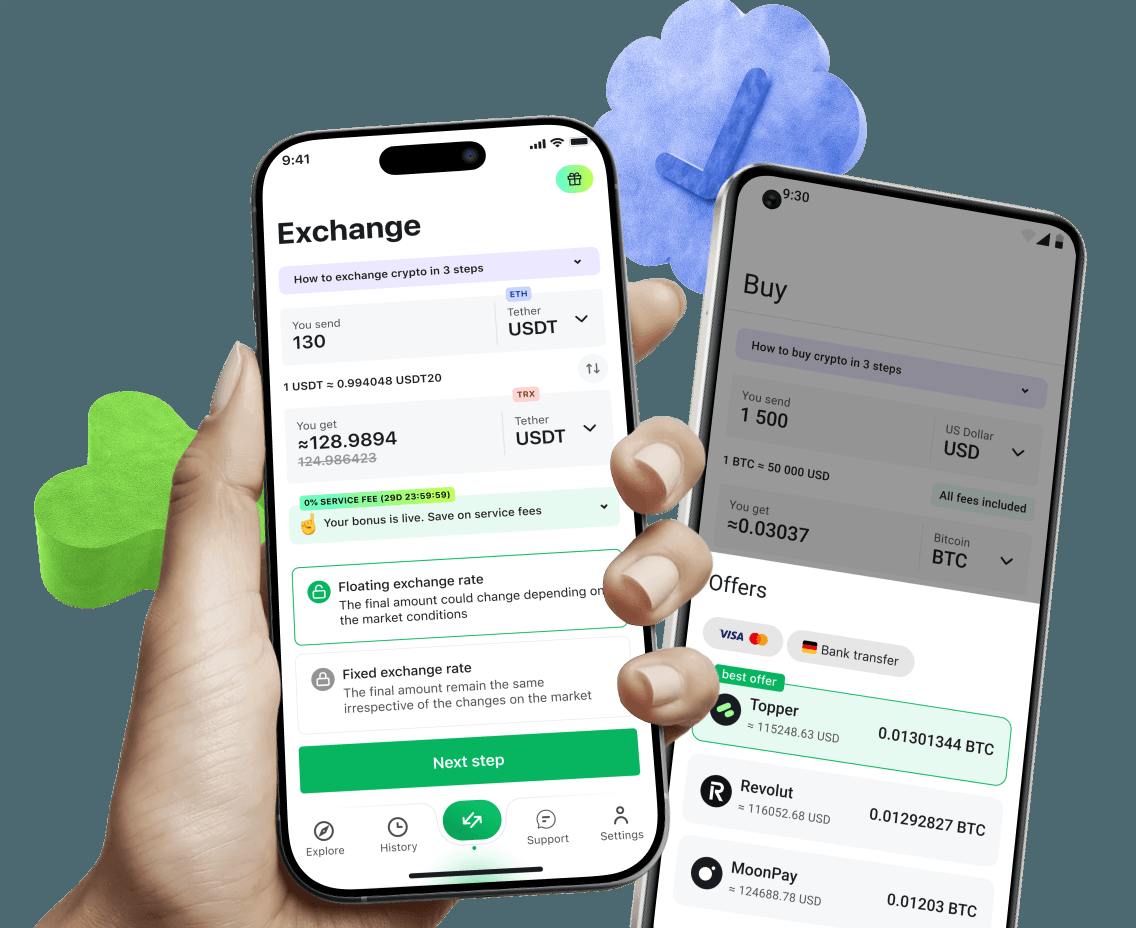
A sensible first transaction starts with a mainstream pair and a modest amount. Select BTC to ETH, ETH to XRP, or ADA to BTC, then choose fixed or floating pricing. Review the receiving amount, network, destination address, and any memo or tag requirement before sending funds from the source wallet.
After the preview, Changelly fees are already represented in the amount expected at the destination. The sender completes the deposit transaction, waits for confirmations, and tracks the exchange until the output arrives. If the quote expires before funds arrive, the transaction follows the platform's updated handling path rather than the original preview.
When the convenience is worth the spread
Instant exchange pricing earns its place when time, asset coverage, and wallet delivery matter more than advanced order controls. Users swapping into a hard-to-find token, rebalancing a cold wallet, or moving from BTC into a stablecoin gain a straightforward route across a large coin list. The platform's support availability and long operating history add practical value for people who do not trade every day.
The cost deserves attention on small swaps, volatile assets, and expensive networks. A $40 token conversion on Ethereum faces a different fee burden than a larger BTC-to-USDT route during quiet network conditions. Read the quote as a complete package: sent amount, received amount, rate mode, destination chain, and expected settlement time. That view turns Changelly fees from a vague complaint into a concrete pricing decision.
Changelly fees: questions and answers
- Fees on a fixed-rate quote versus a floating quote: which costs more?
- A fixed-rate quote prices certainty into the swap because it holds the displayed rate for a limited time while the user sends funds. A floating quote follows live market pricing until execution, so the receive amount shifts with the market. The cheaper choice is the one with the better final receive amount at the time you transact, after network costs and asset liquidity are included.
- Which network fee matters most when swapping ERC-20 tokens through Changelly?
- For ERC-20 assets, Ethereum gas is the network cost users notice most. The sending wallet pays to move the deposit, and the exchange route also reflects the cost of delivering the output asset. During congested periods, small ERC-20 swaps lose more value to network costs, so the same percentage spread feels larger on low-dollar transactions.
- Can a card purchase carry different charges than a crypto swap?
- Yes. A card purchase includes fiat payment processing, provider pricing, possible bank currency conversion, and identity checks in addition to the crypto purchase quote. A crypto-to-crypto swap starts from an on-chain deposit and avoids the card payment layer. That is why buying BTC with a card and swapping BTC for ETH show different cost structures.
- Does a small altcoin swap have worse pricing than Bitcoin or Ethereum?
- Small altcoin swaps commonly show wider effective costs because liquidity is thinner and minimum transaction rules matter more. Bitcoin and Ethereum pairs draw from deeper markets, so the spread is typically tighter. With less-traded tokens, the quote absorbs harder routing, lower depth, and blockchain costs that take a larger share of the transaction value.
- When is an order book exchange cheaper than a Changelly quote?
- An order book exchange is cheaper when the user already has funds on the venue, places trades efficiently, and withdraws during reasonable network conditions. Binance or Coinbase Advanced style interfaces give more price control but require account balances and withdrawal steps. An instant quote is stronger when wallet-to-wallet convenience and broad coin access matter more than order placement tools.