Changelly is an instant crypto swap service built around rate comparison and wallet delivery
Changelly is an instant cryptocurrency exchange for swapping Bitcoin, Ethereum, XRP, ADA, stablecoins, and more than 1,000 other digital assets without leaving coins parked on an exchange balance. It compares quotes through more than 20 trading platform partners, lets the user pick a crypto pair and rate type, then sends the exchanged asset to the destination wallet after the transaction settles.
Exchange flow from coin pair to destination wallet
The core workflow is direct: choose the asset being sent, choose the asset being received, enter the receiving wallet address, review the quote, and send funds to the deposit address shown for the order. Once the incoming transaction reaches the required network confirmations, the service completes the trade and delivers the new coin to the wallet address supplied during checkout.
That structure suits users who already manage their own wallets. A Bitcoin holder moving into ETH, a USDT holder rotating into XRP, or a Cardano buyer receiving ADA all deal with a single order screen rather than an order book. Changelly handles the market routing behind the scenes while the user handles the asset, network, and wallet address choices.
What the 20-plus trading partners actually do
The partner network is the rate engine. Instead of publishing one internal market for every pair, the service scans liquidity from connected venues and presents an exchange quote for the requested route. That matters most when trading assets outside the deepest BTC and ETH markets, where spreads and availability change quickly across venues.
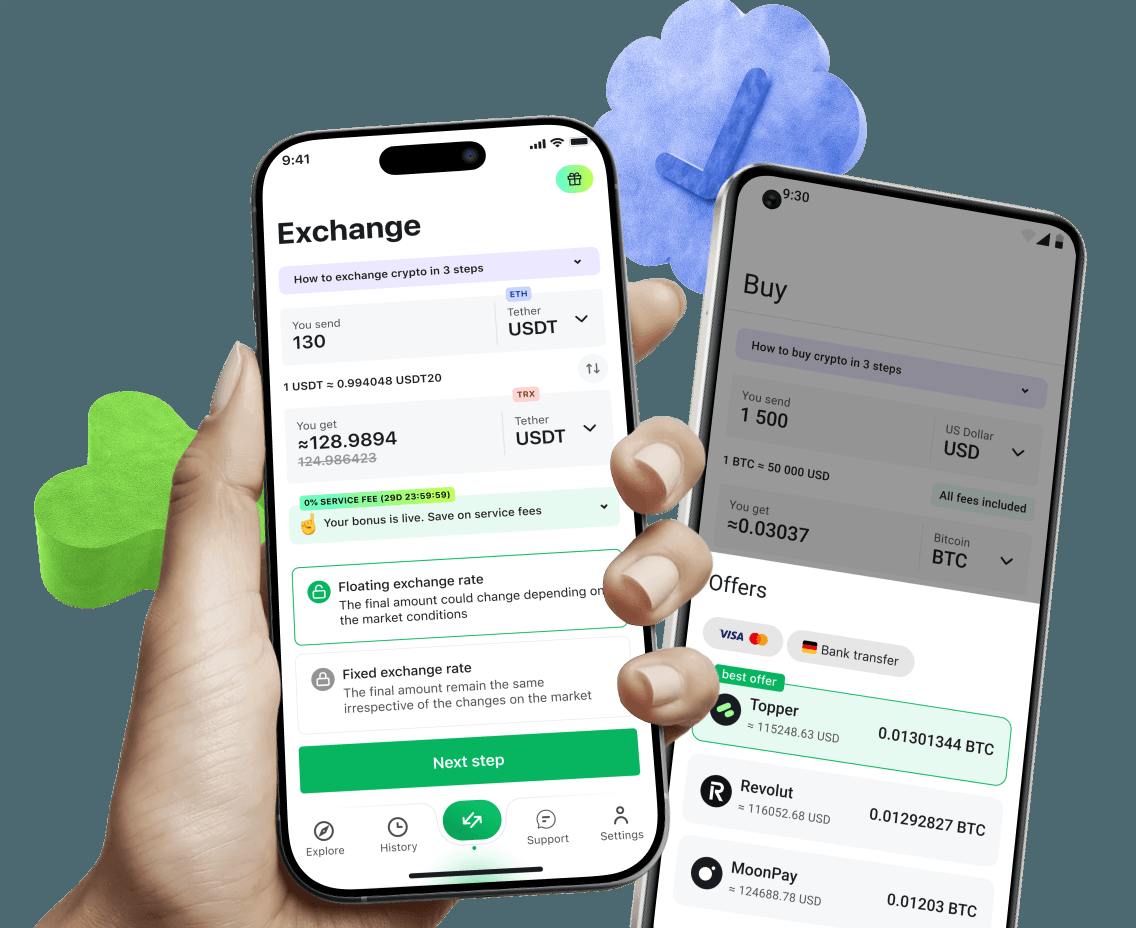
Quotes come in two practical forms. A floating-rate exchange follows market movement while the order is being processed, so the final received amount reflects the live execution price. A fixed-rate exchange locks the quoted amount for a limited order window, which gives clearer output before the user sends funds. Changelly uses both models because different users value price certainty and market flexibility differently.
BTC, ETH, XRP, ADA, stablecoins, and long-tail altcoins
Asset breadth is the main reason people land on this type of exchanger. The catalog spans major networks and tickers such as BTC, ETH, XRP, ADA, SOL, USDC, and USDT, while also reaching smaller altcoins that many simple retail apps never list. The useful detail is pair availability: a coin appearing in the catalog does not mean every direct route has equal depth, so the exchange screen becomes the source of the current pair quote.
Network selection deserves attention with tokens that exist on several chains. USDT, USDC, wrapped assets, and exchange-issued versions of popular coins appear across ecosystems such as Ethereum, BNB Chain, Tron, Solana, and others. The receiving wallet must support the exact network chosen for the transaction, because a correct ticker on the wrong chain still creates a failed delivery problem.
Five to forty minutes is the normal swap window
The advertised average completion time sits in the 5-40 minute range. That window reflects two separate clocks: blockchain confirmation time for the deposit and execution time for the exchange route. Bitcoin confirmations, Ethereum gas congestion, XRP ledger speed, and partner-side liquidity all influence how quickly a specific order reaches the payout stage.
Small transfers on fast chains finish quickly when the sender uses the right network fee and the pair has ready liquidity. Larger trades and busy networks take longer because the order waits for enough confirmations before the exchange releases the outgoing asset. The order status page matters during that period because it shows whether the service is waiting for a deposit, processing the trade, or sending the payout.
Fees, spreads, and the rate shown before payment
Costs show up through the quoted exchange rate, the selected rate mode, and blockchain network fees. A swap from BTC to ETH has different cost pressure than a swap from a thin altcoin into USDC, because liquidity depth and chain fees are different. The number to evaluate is the expected receive amount after all visible charges, not a raw market price from a charting app.
Changelly makes the rate decision before payment, which is the right moment to compare fixed and floating quotes. Fixed rates trade a little flexibility for certainty. Floating rates track execution conditions more closely. A user who is moving funds during volatile market hours reads the quote, the time window, and the destination network together before sending the deposit.
Buying crypto by card and swapping from a wallet serve different needs
The buy flow brings fiat into crypto through card-supported payment partners, while the exchange flow converts one digital asset into another. Both lead to wallet delivery, but they solve different problems. A new user buying BTC with a card cares about payment approval, identity checks from the payment provider, and the receiving address. A wallet user swapping ETH into ADA cares about deposit confirmations, quote type, and network compatibility.
This distinction keeps expectations clear. Fiat purchases involve banking rails and provider review. Crypto-to-crypto swaps revolve around blockchain settlement. Changelly presents both under the same brand experience, yet the timing, data requested, and failure points differ between the two paths.
Security model built around passing funds through the order
The service describes its funds handling around direct delivery rather than long-term exchange custody. The user sends the source asset for a specific order, the exchange route executes, and the received asset goes to the wallet address entered at checkout. That design reduces the need to keep a standing balance inside the service.
Operational security still sits partly with the wallet owner. The destination address, memo or tag, selected network, and deposit amount must match the order instructions. XRP and some exchange-style assets require destination tags or memos; missing that field creates manual recovery work. Browser security, email security, hardware wallet confirmation, and authenticator-based account protection also matter because crypto transfers do not reverse after a completed on-chain send.
How to make a first swap without missing the order details
A first transaction should be boring and deliberate. The strongest workflow is to start with an amount small enough to test the route, then repeat the same process with the intended amount after the receiving wallet confirms the payout. That adds one extra step, but it validates the address, network, and wallet support before more value moves.
- Confirm the sending asset, receiving asset, and exact blockchain network.
- Copy the receiving address from the wallet that will hold the payout.
- Include any required memo, tag, or payment ID before creating the order.
- Review fixed versus floating rate output before sending funds.
- Send only the asset and amount requested for that order.
- Keep the order identifier until the payout appears in the destination wallet.
In practice, Changelly works best when treated like a transaction router rather than a place to store funds. The order is the unit of activity: quote, deposit, exchange, payout. Keeping each swap isolated makes troubleshooting simpler if a chain delays confirmations or a wallet needs time to index a received token.
When another exchange style fits better
An instant swap interface is strongest for direct wallet delivery, quick portfolio rotation, and coins that are inconvenient to reach through a user's main exchange account. Active traders who need limit orders, margin, advanced charting, or order-book depth use centralized exchanges such as Coinbase, Kraken, Binance, or OKX for that specific trading style. DeFi users who want on-chain execution from a wallet compare aggregators such as 1inch, Matcha, or Jupiter on supported networks.
The practical choice comes down to control surface. A full exchange account gives more trading tools and more account settings. A DeFi aggregator keeps execution on-chain but requires network-specific wallets and gas management. Changelly focuses on a simpler cross-asset route: enter the pair, accept the quote, fund the order, and receive the new asset in a wallet.
Support, app access, and the role of a simple interface
The service emphasizes 24/7 live support, a mobile app, and a multilingual experience. Those features matter because swap problems rarely look like ordinary website errors. A delayed deposit, incorrect memo, unsupported wallet network, or expired fixed-rate window needs order-level help rather than generic account guidance.
Its mobile app extends the same exchange and buy paths to users who manage addresses from a phone wallet. Changelly also presents market sections for popular crypto, top gainers, and top losers, which helps users discover active assets before creating a swap. The strongest use case remains the same across desktop and mobile: turn one supported crypto asset into another and have the result delivered to the wallet the user controls.
What to know about Changelly
How long does a crypto swap take after sending funds?
The stated average swap window is 5-40 minutes, but the exact time follows blockchain confirmations and route execution. A fast network with normal traffic settles sooner than a congested chain or a large transfer that needs more confirmations. If the order status shows the deposit as received, the remaining wait is the exchange and payout stage.
Do I need a wallet before using the exchange flow?
Yes, the crypto-to-crypto swap flow requires a receiving wallet address for the asset being delivered. The wallet must support both the token and the selected blockchain network. For assets that require a memo, destination tag, or payment ID, that extra field should be entered with the address so the payout reaches the right account.
What happens if I choose the wrong network for a token?
Choosing the wrong network sends the payout or deposit on rails the receiving wallet may not support. A USDT transfer on Tron, Ethereum, or BNB Chain is not interchangeable from a wallet's point of view. Recovery depends on wallet control, exchange support, and the specific chain, so network selection is one of the most important checks before funding an order.
Is a fixed-rate swap better than a floating-rate swap?
A fixed-rate swap is better when the user wants a clearer received amount before sending funds. A floating-rate swap is better when the user accepts live market movement during processing. Fixed quotes have a time window and stricter order conditions, while floating quotes reflect the execution price available when the deposit is processed.
Which coins are commonly swapped through this type of service?
Common routes include major assets such as BTC, ETH, XRP, ADA, SOL, USDT, and USDC, along with many smaller altcoins. The service lists more than 1,000 digital assets, but availability and rate quality depend on the specific pair and market liquidity at the time the user creates the order.
Can I buy Bitcoin with a card instead of swapping crypto?
Yes, the buy flow supports card-based crypto purchases through payment partners. That process differs from a wallet-to-wallet swap because fiat payment approval, provider checks, and card processing enter the transaction. The purchased crypto is still directed to a receiving wallet address, so address and network accuracy remain important.
Fees on Changelly swaps come from where?
Swap costs appear in the exchange quote, the spread available through the routed market, and blockchain network fees for the assets involved. The useful comparison is the final amount expected in the receiving wallet after visible charges. Thinly traded pairs, busy chains, and fixed-rate protection all influence the effective cost of a transaction.